Every executive, programmer, and creator knows the feeling, even if they don’t have a name for it. You sit at your desk for ten hours. Your mind is racing, solving problems, moving at terminal velocity. But from the neck down, your body feels like an abandoned building.
This isn't just "being tired." In neurobiology, it’s a recognized state of survival called sensory gating and somatic dissociation. When your sympathetic nervous system (the fight-or-flight mode) is chronically activated by deadlines and stress, your brain makes an executive decision: it mutes the sensory signals coming from your body so you can keep working.
The tightness in your shoulders, the shallow breathing, the quiet exhaustion in your lower back—your brain tunes them out. You don’t feel the tension until you finally stop at 2 a.m., staring into an empty kitchen.
Why Mental Relaxation Isn’t Enough
Most people try to fix this by giving their mind more input: scrolling a feed, watching a show, or listening to a podcast. But your nervous system doesn’t understand language; it understands pressure, temperature, and friction.
To pull your consciousness out of your head and back into your skin, you need a physical anchor. You need to trigger the parasympathetic nervous system (the rest-and-digest mode) through targeted somatosensory stimulation.

The Science of Targeted Realignment
This is where the architecture of personal care objects changes from luxury to necessity. Standard wellness tips tell you to just “relax,” but releasing deep-seated somatic numbness requires a systematic approach:
Steady Low-Frequency Pressure: High-frequency, erratic vibrations only startle the nervous system. What the body responds to is steady, low-frequency pressure that can penetrate thick muscle groups—like the lower back and shoulders—sending a signal to the brain that it is safe to let go.
The Power of Thermal Anchoring : Cold materials trigger subtle muscle guarding. An object that retains body heat and matches your skin temperature bypasses the body’s natural defense mechanism, allowing the sensory mapping in your brain to light up again.
When you address the body first, the mind follows naturally. By taking twenty minutes to systematically address physical tension, you aren’t just treating a muscle; you are rebuilding the boundaries of your personal space.
WELO designs tools for this exact transition.
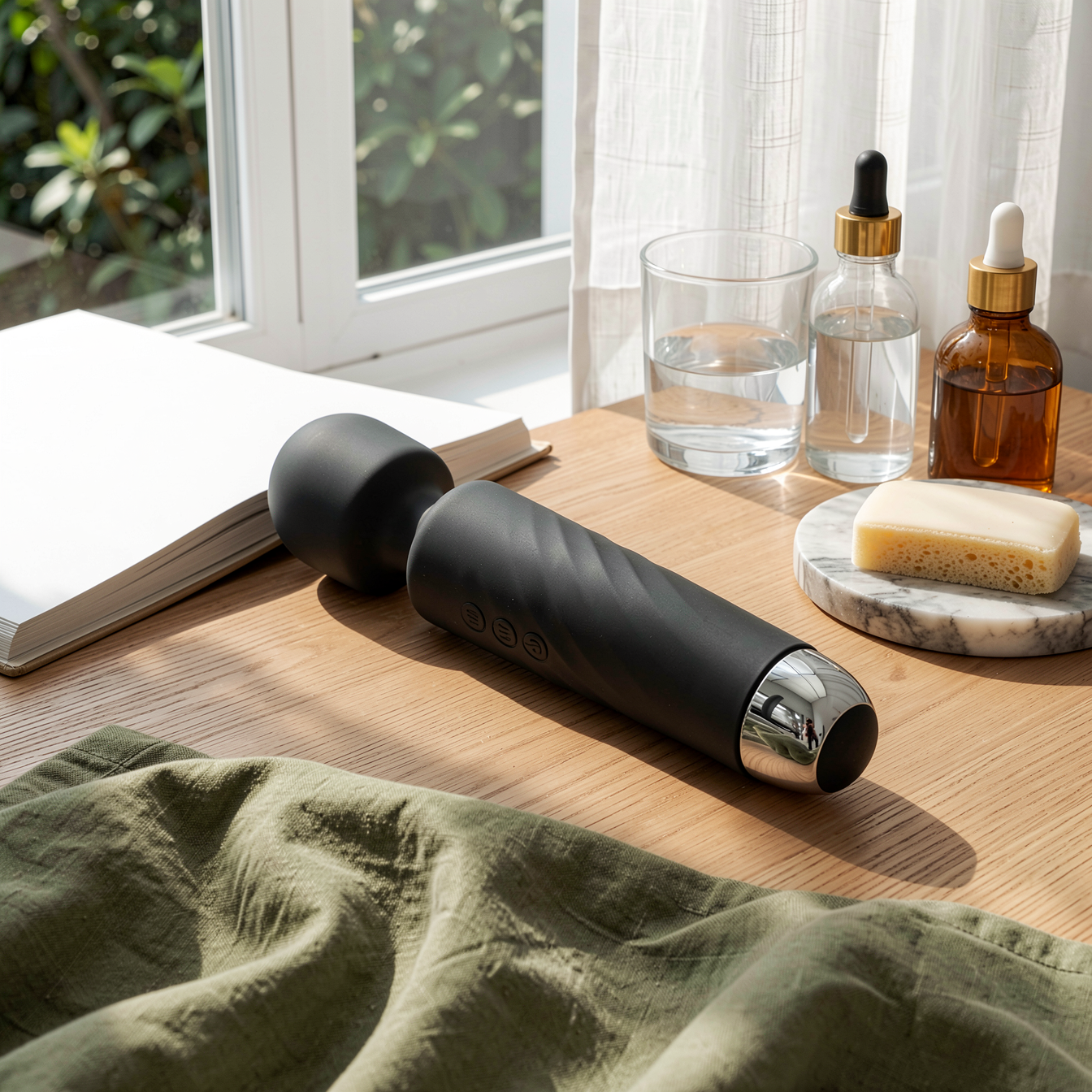
Our personal massager, axis, is engineered with medical-grade silicone that warms to your touch, featuring 4 speeds and 7 modes designed to follow your body. It is a discreet, near-silent object built entirely for post-run recovery, muscle relief, and the slow rituals of wind-down.